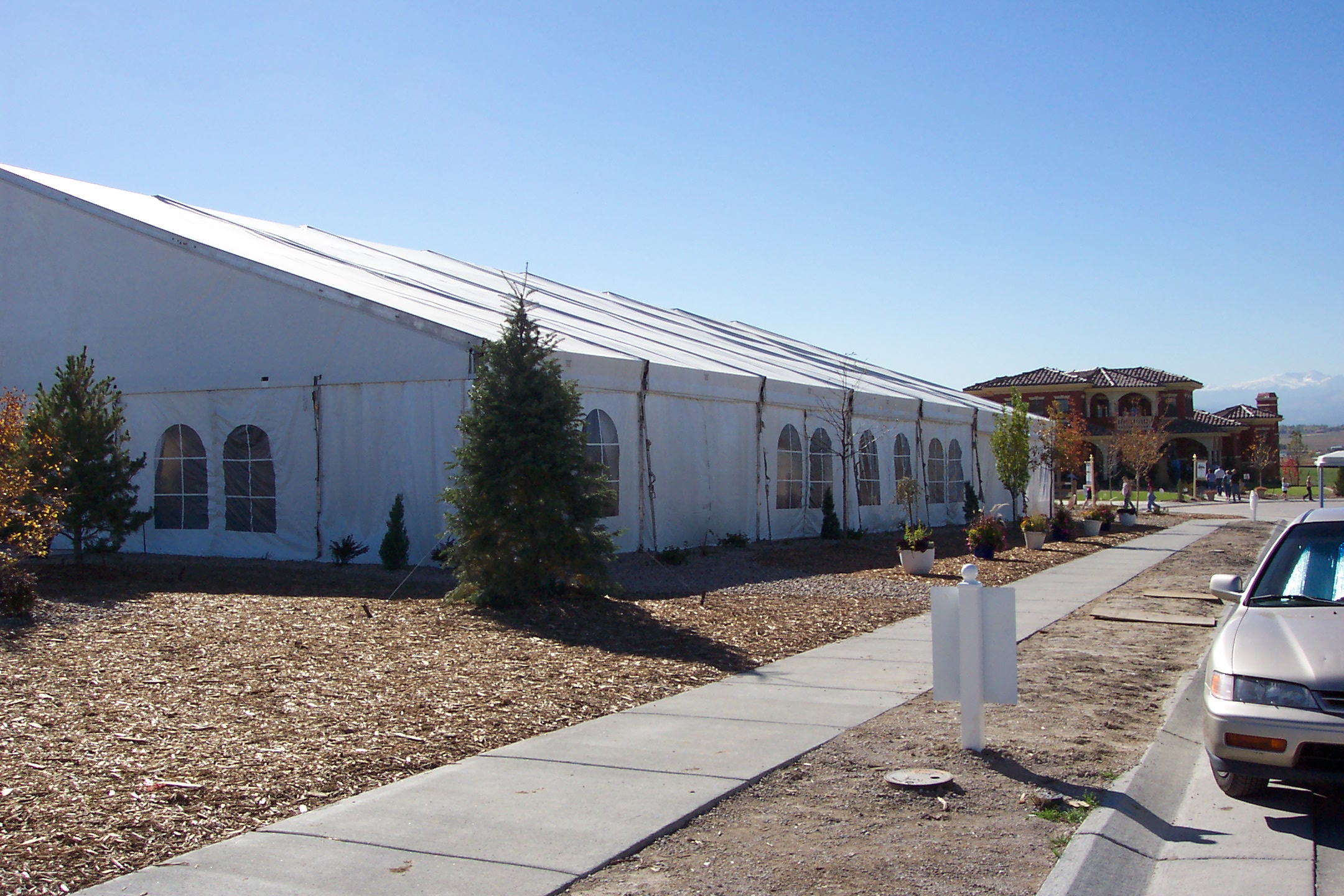
Fall is the best season to hold an event outdoors in Colorado and the hardest one to forecast. A date in late September can deliver 75 degrees and full sun or an inch of wet snow, and you will not know which until it is far too late to change anything structural. Mountain View Tent Company has been setting tents across the Front Range since 2002, and the planners who come through fall without incident are not the ones with better forecasts. They are the ones who made their decisions in the right order.
Here is that order.
Settle the guest count before you talk about tent size
Guest count is the input everything else runs on, and it is the number most likely to be soft in September. Get to a working figure early, and be honest about whether it can grow. A count that drifts upward after the tent is reserved is the most common reason a fall event ends up with people standing outside the cover, which is exactly the situation the tent was meant to prevent.
Once the count holds, the footprint follows, and so does the list of structures that can carry it. Our tent styles and sizes lay out what is available at each scale.
Size for the worst likely day, not the average one
The temptation in fall is to plan for the day you are hoping for. A tent sized for good weather works until the weather turns, and then the cocktail hour that was going to happen on the lawn has to happen under the same roof as dinner.
Plan the footprint so every guest and every function fits under cover at once. If that number is uncomfortable, it is better to learn it in September than at four o’clock on the day.
Walk the site while you still have options
Go to the site with the tent in mind rather than the event. Where is the ground level, and where does it fall away? Where does water run after a hard rain, and where will it pool? Can a truck get in, turn around and get back out? What is the surface, and is it the same surface across the whole footprint?
Bring what you find to the conversation early. Our install crews assess the site as part of the job, and how they read exposure, drainage and surface is covered in tents that can withstand Colorado’s wild weather. What you are doing on your own walk is different: you are finding the problems while there is still time to move the tent thirty feet.
Order the walls even if you hope not to use them
Standard matching sidewalls are included in the base tent price, and specialty walls are priced separately. That makes the walls decision easy in fall. Have them on site. An enclosure you did not need costs nothing. One you needed and did not order cannot be produced on the afternoon of the event.
Decide the contingency calls in advance, with dates attached
Contingency planning in fall is not weather prediction. It is deciding now who decides later, and when. Write these down:
- At booking. Tent size, walls in the order, site plan and access route. We ask for a minimum of two weeks’ notice, and fall dates deserve considerably more than the minimum because inventory is limited.
- Two weeks out. Confirm the surface and access have not changed, and lock the headcount you are actually setting for.
- The week of. Decide the wall configuration you are starting with, and tell your other vendors.
- The day before. Confirm install timing, and confirm the walls call.
- The day of. One named person decides whether walls go up or come down, and that person is reachable.
Name the decision owner
The failure in a fall event is rarely the structure. It is four people with partial information making a call at the last minute. Pick one person, tell the caterer and the rental vendors who it is, and give them the authority to make the call without a committee. Which tent style suits which season is covered in our guide to tent options for every season in Colorado.
If you are holding a fall date and have not settled the structure, request a quote with your count, your site and your date, and we will work backwards from the worst likely day.